Scleral Lenses for Dry Eye: Contacts for Severe Dry Eyes
Dr. Jason Huang
·9 min read
Opens our inquiry form in a new tab. Tell us what's going on and the clinic will follow up about a consultation.
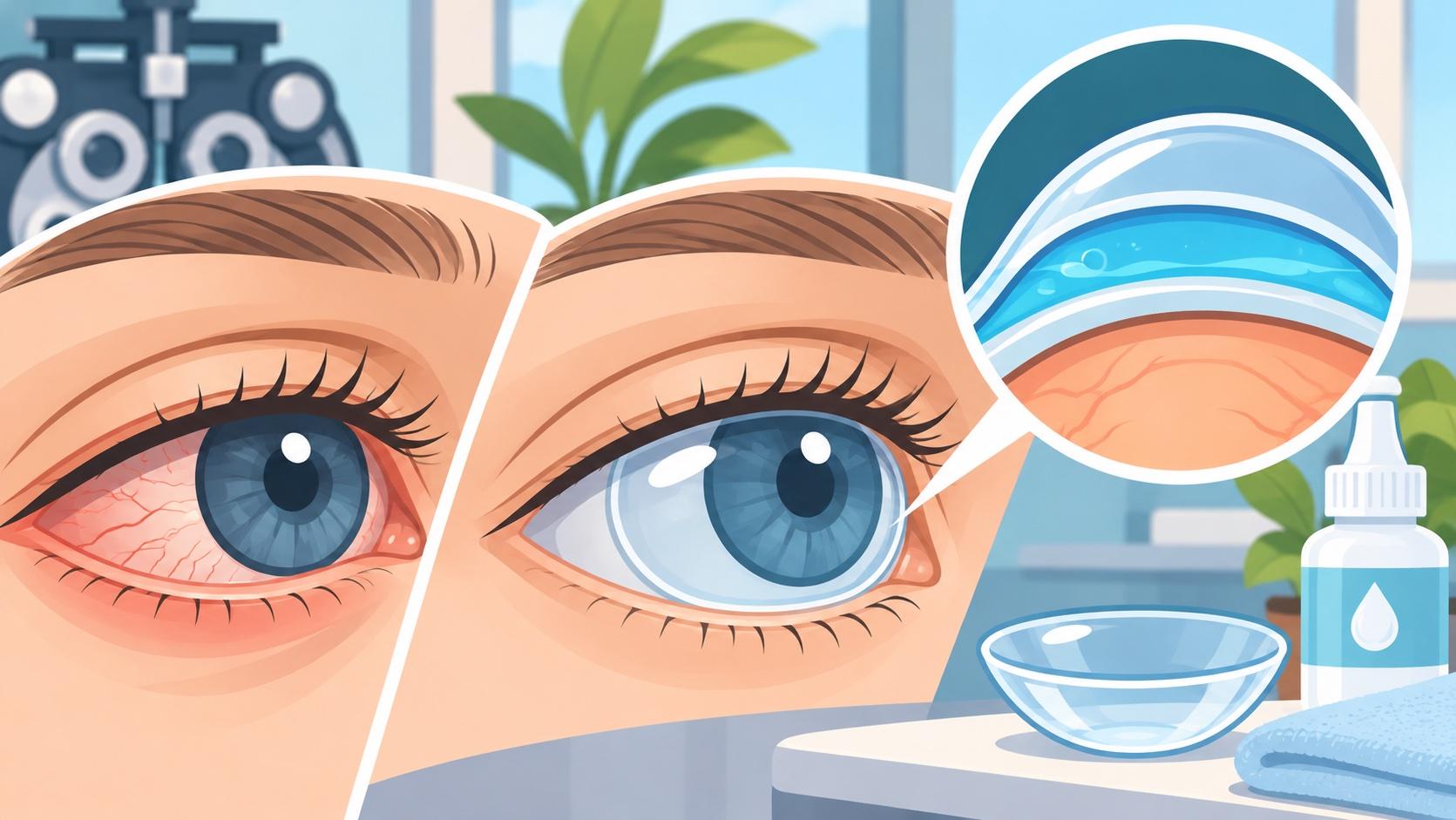
If you have severe dry eye, you've probably been told at some point to give up on contact lenses. It's reasonable advice for regular soft lenses, which often make dry eyes feel worse. But scleral lenses for dry eye work differently. For many people with moderate to severe dry eye, they're not only wearable, they're one of the more effective ways to get relief.
Dry eye is common. A population-based survey of Ontario adults(opens in new tab), published in The Ocular Surface, estimated that more than 6 million Canadian adults may have dry eye disease. Most of them manage with drops and other everyday treatments. This post is about the smaller group whose dry eye is severe enough that those aren't enough, and who have mostly given up on contact lenses.
Why Regular Contact Lenses for Dry Eyes Often Fail
Soft contact lenses sit directly on the cornea (the clear front surface of the eye) and rely on your tears to stay moist and comfortable. When tear production is healthy, that works fine.
With dry eye, there aren't enough good-quality tears to go around. A soft lens competes for that limited supply, and it can dry out over the day. That's why so many people with dry eye describe their contacts as gritty, scratchy, or unbearable by mid-afternoon, even with rewetting drops.
It's one of the main reasons people stop wearing contacts. In a survey of more than 4,000 current and former Canadian contact lens wearers(opens in new tab), about 23% had stopped wearing lenses permanently, and discomfort and dryness were the leading reasons. If that's you, our post on what to do when you can't wear soft contacts covers some other options too.
How Scleral Lenses Keep Dry Eyes Moist
A scleral lens is a large, rigid, gas-permeable lens that doesn't touch the cornea at all. It vaults over it and rests on the white of the eye (called the sclera). Before you put the lens in, you fill its bowl with sterile, preservative-free saline.
Once the lens is on, the cornea sits under a layer of that fluid for as long as you wear it. The lens acts like a small, sealed reservoir. Blinking doesn't wipe the surface dry, air and screens don't evaporate the tears away, and the lens itself can't dehydrate the way a soft lens can.
For people with a damaged or very dry corneal surface, that constant moisture can give the surface a chance to heal. If you're new to scleral lenses in general, our Scleral Lenses 101 guide explains how they're designed and fitted. For how they compare with other lens types, see RGP vs. soft vs. scleral lenses.
What the Research Shows About Scleral Lenses for Severe Dry Eye
Some of the clearest evidence comes from people with the most severe dry eye. In a 2024 study of 62 eyes with chronic ocular graft-versus-host disease(opens in new tab), a complication of stem cell transplants that often causes severe dry eye, patients' median dry eye symptom score (the Ocular Surface Disease Index, or OSDI) dropped from 73 before fitting to 27 with mini-scleral lenses. Their vision improved as well, and damage to the corneal surface decreased.
It's not a perfect result for everyone, and the same study shows that. Seven of the 31 patients (22.6%) eventually stopped wearing the lenses.
A 2024 review in the Journal of Clinical Medicine(opens in new tab) summed up the wider picture. Scleral lenses are well established for eyes with corneal damage or irregular shape. For mild to moderate dry eye without those problems, though, the authors concluded there isn't yet enough high-quality evidence to recommend them, even as more clinicians are starting to offer them. The review also notes that international dry eye guidelines have placed scleral lenses among the more advanced treatment steps, and that some clinicians now argue they could be used earlier.
Who Tends to Benefit Most
We usually consider scleral lenses for dry eye when:
-
Dry eye is moderate to severe and hasn't improved enough with drops, eyelid treatments, anti-inflammatory medication, or punctal plugs (tiny plugs that slow tear drainage)
-
An autoimmune condition like Sjögren's syndrome, rheumatoid arthritis, or lupus is reducing tear production
-
Dry eye is caused by graft-versus-host disease after a stem cell or bone marrow transplant
-
The eyelids don't close fully, leaving part of the eye exposed (called exposure keratopathy)
-
The cornea has lost some of its normal feeling, so it doesn't signal dryness or heal well (called neurotrophic keratopathy)
-
Soft contacts have become impossible, but you still want or need to wear lenses
For mild dry eye, scleral lenses usually aren't the first step. A different soft lens material, a daily disposable, or treating the dry eye itself is often enough. Our dry eye treatment page walks through the options we use first.
Scleral Lenses vs. Other Contact Lenses for Dry Eyes
If you're weighing your options, here's roughly how the main lens choices compare for people with dry eye:
Daily disposable soft lenses | Monthly or two-week soft lenses | Scleral lenses | |
|---|---|---|---|
How it handles moisture | Relies on your tears | Relies on your tears | Brings its own saline reservoir |
Touches the cornea? | Yes | Yes | No, it vaults over it |
Typically suited to | Mild dry eye | Healthy eyes, or mild dryness with a well-matched material | Moderate to severe dry eye, or dry eye with corneal damage |
Comfort late in the day | Often fine in mild cases | Often the first to feel dry | Usually steady, though fogging can build up |
Handling | Easy | Easy | Takes practice |
Fitting | Standard | Standard | Custom, over several visits |
A fresh daily lens every morning is often the first thing we try for mild dryness, because there's no build-up of deposits over time. When dryness is severe enough that even a fresh soft lens feels scratchy by lunchtime, that's usually the point where scleral lenses make more sense.
What Scleral Lens Fitting for Dry Eye Involves
The fitting process is similar to fitting scleral lenses for any other reason, with extra attention to the eye's surface.
-
Assessing the dry eye. We look at the tear film, the eyelids and oil glands, and any damage to the cornea's surface, so we understand what's driving the dryness.
-
Mapping the eye. Scleral lenses rest on the white of the eye, so we measure its shape as well as the cornea's.
-
Trial lenses. We place diagnostic lenses and check how much clearance there is over the cornea and how the edge sits on the sclera.
-
Custom lenses and training. Your lenses are made to order. You'll learn how to fill, insert, and remove them, usually with a small suction tool or your fingertips.
-
Follow-ups. We check the fit after you've worn the lenses for several hours, and adjust as needed.
Most people also keep up some of their other dry eye treatment alongside the lenses, such as preservative-free drops before insertion and after removal, or eyelid care.
Daily Life With Scleral Lenses: Wear Time, Fogging, and Drops
Most people wear scleral lenses for most of their waking day and take them out at night. Wear time builds up over the first week or two.
The most common annoyance is midday fogging, where the fluid behind the lens gradually turns cloudy and vision gets hazy. The 2024 review notes that fogging tends to be more of an issue for people with dry eye. It's usually manageable: a fit adjustment, a different filling solution, or simply taking the lens out, rinsing it, and refilling it partway through the day. Some people also notice their eyes feel dry for a while after taking the lenses out at night, which lubricating drops can help with.
On drops: not every dry eye drop is suitable to use with scleral lenses in. Your optometrist can tell you which preservative-free products to use and when. Daily cleaning matters too, and our guide to specialty contact lens care and cleaning covers the routine.
What the First Few Weeks Feel Like
Most people find the first attempts at putting in a scleral lens awkward. The lens is bigger than a soft lens, and it has to go in face-up and full of saline without spilling. It usually clicks after a few days of practice, and we'll make sure you're comfortable doing it on your own before you leave.
The lens itself is often more comfortable than people expect. Because it doesn't rest on the cornea, which is the most sensitive part of the eye, many wearers say they forget it's there after a while. What you're likely to notice first is the relief: eyes that aren't burning or scratchy by mid-afternoon.
Give it a couple of weeks before judging. Fit adjustments in the early follow-ups are normal and often make a noticeable difference to comfort and clarity.
Coverage and Cost in Ontario
OHIP doesn't cover contact lenses, including scleral lenses. For eye exams, children 19 and under and adults 65 and over are covered. Adults 20 to 64 are covered only if they have an eligible medical condition(opens in new tab). The list includes "corneal disease that is acute, or is chronically progressive," which can apply when dry eye is damaging the cornea, but not every case qualifies.
For the lenses themselves, most extended health plans include a vision or contact lens allowance, and some provide more coverage when lenses are medically necessary. It's worth calling your insurer before your fitting to ask. Our post on scleral lens costs in Ontario explains what goes into the price.
Setting Realistic Expectations
Scleral lenses don't cure dry eye but they help manage the eye's surface while you're wearing them, and they tend to work best as part of a broader plan that also treats what's causing the dryness.
For the right person, though, the change can be big. We regularly meet people who haven't had a comfortable afternoon in years, and a well-fitted scleral lens gives them that back. Follow-up visits matter over the long term, because the eye's surface and the fit can both change.
Is It Worth Looking Into?
If dry eye has taken contact lenses off the table for you, or drops alone aren't keeping your eyes comfortable, it may be worth finding out whether scleral lenses are an option. We'll look at what's causing your dry eye, check the health of your cornea, and talk through whether scleral lenses make sense alongside your other treatment. Submit an inquiry(opens in new tab) and our team will be in touch to set up a consultation.