How to Clean Scleral Lenses, RGPs, and Hybrids: A Care Guide

Dr. Jason Huang
·11 min read
Opens our online booking page in a new tab. Pick a time that suits you.
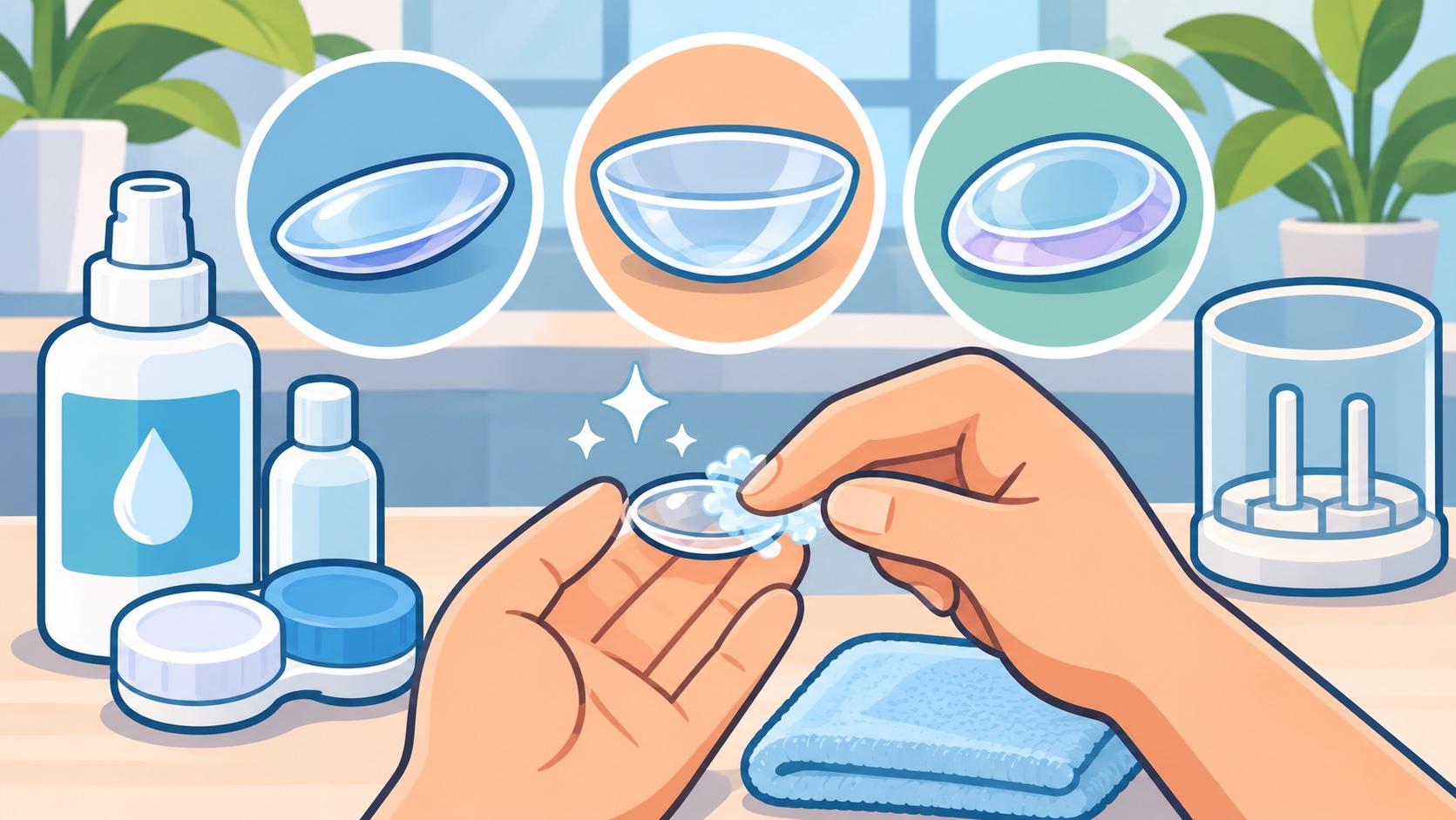
Scleral, RGP, and hybrid lenses cost more than soft contacts, take longer to fit, and usually last a year or more. That makes the cleaning routine more important, not less. A good routine keeps the lenses comfortable and clear for as long as possible, and it's your best protection against eye infections. This guide covers how to clean scleral lenses, RGPs, and hybrids, what to use, what to avoid, and when a lens needs replacing.
If you're still deciding on a lens type, our guide to specialty contact lenses covers the options, and our comparison of hard vs. soft contact lenses explains how these three designs differ.
Why Good Lens Care Matters
Most contact lens problems come down to habits. In a 2015 CDC survey of U.S. contact lens wearers(opens in new tab), about 99% reported at least one habit that raises the risk of eye infection. More than half (55.1%) had topped up old solution in their case instead of replacing it, 35.5% had rinsed their lenses in tap water, and 82.3% kept their lens case longer than recommended.
The infection that eye care providers worry about most is a rare but serious corneal infection called Acanthamoeba keratitis, caused by a tiny organism found in tap water, pools, and soil. A 2023 case-control study in Ophthalmology(opens in new tab) found that people using reusable lenses, including rigid lenses, had several times higher odds of this infection than people using daily disposables. Because scleral, RGP, and hybrid lenses are all reusable, the cleaning routine is what keeps that risk low.
The Daily Cleaning Routine for Rigid Lenses
The basic steps are the same for scleral, RGP, and hybrid lenses every time you take them out:
-
Wash and dry your hands. Use soap and water and dry them on a lint-free towel before touching the lenses.
-
Clean the lens. Put a few drops of the cleaner your optometrist recommends on the lens and rub it gently on both sides for several seconds, in the palm of your hand or between your thumb and finger. Rub even if the bottle says "no rub."
-
Rinse it. Rinse off the cleaner with the rinsing solution recommended for your system, never tap water.
-
Disinfect and store it. Put the lens in a clean case with fresh disinfecting solution and let it soak for the full time on the label, usually overnight.
-
Empty and dry the case. In the morning, dump the old solution, rinse the case with fresh solution (not water), and leave it open and upside down to air-dry.
The rubbing step matters more than it looks. In a study comparing rigid lens cleaning methods(opens in new tab), soaking without rubbing failed to remove stubborn deposits from 94% of lenses. Rubbing wasn't perfect, but it cleared most of the deposit from about two-thirds of them.
The CDC's contact lens hygiene guidance(opens in new tab) lines up with these steps: rub and rinse your lenses, never mix fresh solution with old solution in the case, and replace your case at least once every three months.
Even with a perfect daily routine, rigid lenses slowly build up a film of protein and oils. You might notice hazier vision, a lens that feels less slippery, or water beading on the surface instead of spreading evenly.
Many rigid lens wearers use a protein remover or an enzymatic cleaner, often weekly, to lift those deposits. Some lenses also benefit from a stronger in-office deposit remover (such as Progent). These products never go in the eye, so the lens needs a thorough rinse afterward. Your optometrist will tell you whether your lenses need one and how often.
Care at a Glance
RGP | Hybrid | Scleral | |
|---|---|---|---|
Daily clean | Rigid-lens cleaner, gentle rub | Gentle rub, careful at the soft edge | Rigid-lens cleaner, gentle rub |
Disinfection | Peroxide or rigid-lens system | Peroxide or another system approved for hybrids | Peroxide or rigid-lens system |
Before insertion | Conditioning or wetting solution | As directed for your lens | Fill with preservative-free saline |
Handling tool | Fingertips; small plunger for removal if needed | Fingertips | Plunger for insertion and removal |
Typical replacement | Often every 1 to 2 years | Every few months | Often about once a year |
Choosing a Solution: Hydrogen Peroxide vs. Rigid-Lens Systems
There are two main types of disinfecting system for rigid lenses.
Hydrogen peroxide systems (such as Clear Care) disinfect well and have no preservatives, which suits people with sensitive or dry eyes. The catch is that peroxide must be neutralized before the lens goes back in. That happens in the special case that comes with the solution, and it takes the full time on the box, usually at least six hours. The FDA warns(opens in new tab) that unneutralized peroxide can sting, burn, and damage the cornea, so it's never used to rinse a lens or put directly in the eye.
Multipurpose rigid-lens solutions combine cleaning, disinfecting, and storage in one bottle, or come as a separate cleaner plus a conditioning solution. They're simpler, but some people react to the preservatives.
Soft-lens solutions aren't always suitable for rigid lenses, and not every solution works with every lens material or coating. That's why it's worth sticking with the system your optometrist recommends and asking before you switch brands.
Scleral Lenses: Extra Steps
Scleral lenses need a few extra habits because they're inserted full of fluid.
Fill with preservative-free saline only. The Scleral Lens Education Society's care guide(opens in new tab) recommends filling the lens with sterile, preservative-free saline. Most people use single-use vials and throw away whatever's left after insertion. Disinfecting solution and regular multipurpose solution aren't suitable for filling, since they'd sit against your cornea all day.
Use and clean your plunger. A small suction tool called a plunger makes insertion and removal much easier, especially in the first few weeks. To remove a lens, the plunger goes on the lower part of the lens, never the centre, and is tilted gently to break the seal. Plungers need cleaning too. The Scleral Lens Education Society suggests soaking them in 3% hydrogen peroxide for 3 hours, rinsing with sterile saline, and replacing them every three months, or sooner if they look worn or dirty.
Check for bubbles. After insertion, look in a mirror for air bubbles under the lens. A bubble can cause discomfort or a blurry or dry spot, and it usually means taking the lens out and refilling it more fully.
Watch for midday fogging. Some wearers find the fluid behind the lens turns cloudy during the day. A quick removal, rinse, and refill often clears it. If it happens every day, mention it at your next visit, since a fit adjustment or different filling solution can help. If you wear sclerals for dry eye, our post on scleral lenses for dry eye covers fogging and daily wear in more detail.
For more on how scleral lenses work, see our Scleral Lenses 101 guide.
RGP and Hybrid Lenses: Handling Notes
RGP lenses are small and firm, which makes them easy to handle with your fingertips but also easy to drop or lose.
Many RGP and scleral wearers have a condition where the cornea gradually thins and bulges forward (keratoconus); our post on contact lenses for keratoconus covers how lens choice changes over time. A few handling habits help:
-
Work over a clean, flat, light-coloured surface, like a towel on the bathroom counter, and put the sink plug in.
-
Always handle and store the right and left lenses in the same order so they never get mixed up.
-
Never bend or flex an RGP lens to clean it, since that can warp or crack it.
Hybrid lenses need a bit more care at the join between the rigid centre and the soft skirt, which is the most fragile part. Clean them gently, don't pinch the soft edge, and check the skirt for tears before each wear. Hybrids also tend to be replaced more often than RGPs because the soft skirt wears out sooner.
Because of that soft skirt, hybrids follow some soft-lens rules. SynergEyes(opens in new tab), the main hybrid lens manufacturer, recommends a daily cleaner approved for soft contact lenses, chemical (not heat) disinfection with a multipurpose or hydrogen peroxide solution, and rewetting drops approved for soft lenses if you need them. Cleaners made only for rigid lenses can damage the skirt.
What Never to Use
Tap water, bottled water, and distilled water. None of these are sterile, and water is the main source of Acanthamoeba. A CDC-led study of Acanthamoeba keratitis in RGP wearers(opens in new tab) found that storing lenses in tap water and topping off solution were among the strongest risk factors. This applies to rinsing lenses, rinsing the case, and wetting a lens before insertion. The CDC also advises taking lenses out before swimming or showering.
Saliva. It's full of bacteria and is never a substitute for solution.
Homemade saline. Salt tablets and home-mixed saline aren't sterile.
Old solution. Topping up yesterday's solution means the lens soaks in solution that's already been used. Empty the case and start fresh every time.
Lens Care When You're Travelling
Travel is when routines slip, so it helps to plan ahead:
-
Pack travel-size bottles of your usual solutions rather than buying an unfamiliar brand at your destination. For flights, keep them in your carry-on liquids bag along with a spare case.
-
If you use a peroxide system, bring its neutralizing case and plan for the full soaking time overnight. You can't cut it short in the morning.
-
Scleral wearers should pack extra saline vials and a spare plunger. Losing a plunger on a trip is more common than you'd think.
-
Bring a backup pair of glasses, in case a lens is lost or your eyes need a break.
-
Hand hygiene still applies in airport washrooms and hotel bathrooms. Hand sanitizer isn't a substitute, since the residue can end up on the lens; soap, water, and a lint-free towel are best.
If you're going somewhere with questionable water quality, be extra careful about keeping water away from your lenses and case, including brushing your teeth and showering.
Caring for Your Lens Case
The case is where germs build up, so it needs as much attention as the lenses. Rinse it with fresh solution after each use, let it air-dry upside down with the caps off, and replace it at least every three months, or whenever you open a new bottle of solution. Peroxide systems come with a new neutralizing case with each bottle; that case should be replaced when you start the new bottle, since the neutralizer wears out.
When to Replace Your Lenses
Rigid lenses aren't disposable, but they don't last forever either. RGP lenses often last a year or two with good care, scleral lenses are commonly replaced about once a year, and hybrids more often. If you're budgeting for replacements, our scleral lens cost guide breaks down what to expect in Ontario. It may be time for a new lens if you notice:
-
Scratches, chips, or cracks, especially near the edge
-
A cloudy film or deposits that don't clean off
-
Vision or comfort that's gradually gotten worse
-
A lens that feels different in the eye than it used to
Routine follow-up visits, often as part of a comprehensive eye exam, catch these changes early, even when everything feels fine.
Warning Signs to Watch For
Take your lenses out and contact your eye care provider promptly if you have:
-
Eye pain that doesn't go away after removing the lens
-
Redness that's getting worse
-
Sensitivity to light
-
Blurred vision that doesn't clear
-
Unusual discharge or watering
These can be signs of an infection or a problem with the fit, and early care makes a big difference.
Questions About Your Lens Care Routine?
A good routine becomes second nature within a few weeks, and it's the easiest way to keep your lenses comfortable and your eyes healthy. If you're not sure your current routine is right for your lenses, or you've noticed any of the warning signs above, book an eye exam(opens in new tab) and we'll check your lenses, your eyes, and your care routine.