Post-Concussion Eye Exam: Common Vision Problems We Look For

Dr. Melissa Yeung
·10 min read
You hit your head, saw a doctor, followed the post-concussion protocol. Rest, gradual return to activity, symptom monitoring. Weeks later, you're technically "cleared," but something still isn't right.
Reading gives you headaches. Screens are exhausting. Your vision goes blurry after a few minutes of focus. You lose your place constantly. Maybe you're seeing double. You've been told the concussion has resolved. So why do you still feel off?
In a lot of these cases, the visual system is the part that hasn't been looked at yet.
A thorough post-concussion eye exam — one that goes well beyond reading a letter chart or shining a light in your eyes — can uncover the kind of vision problems that explain lingering symptoms. This post covers what those problems look like, why they're easy to overlook, and what the evaluation actually checks.
To be clear about what this exam is and isn't: it isn't a test for whether you have a concussion, and it isn't something to rush into the day after a head injury. The diagnosis has already been made and the acute care has already happened. This is the evaluation for what the injury left behind in the visual system, and it's most useful once symptoms have outlasted the usual recovery window, generally a few weeks or more.
The gap in standard post-concussion care
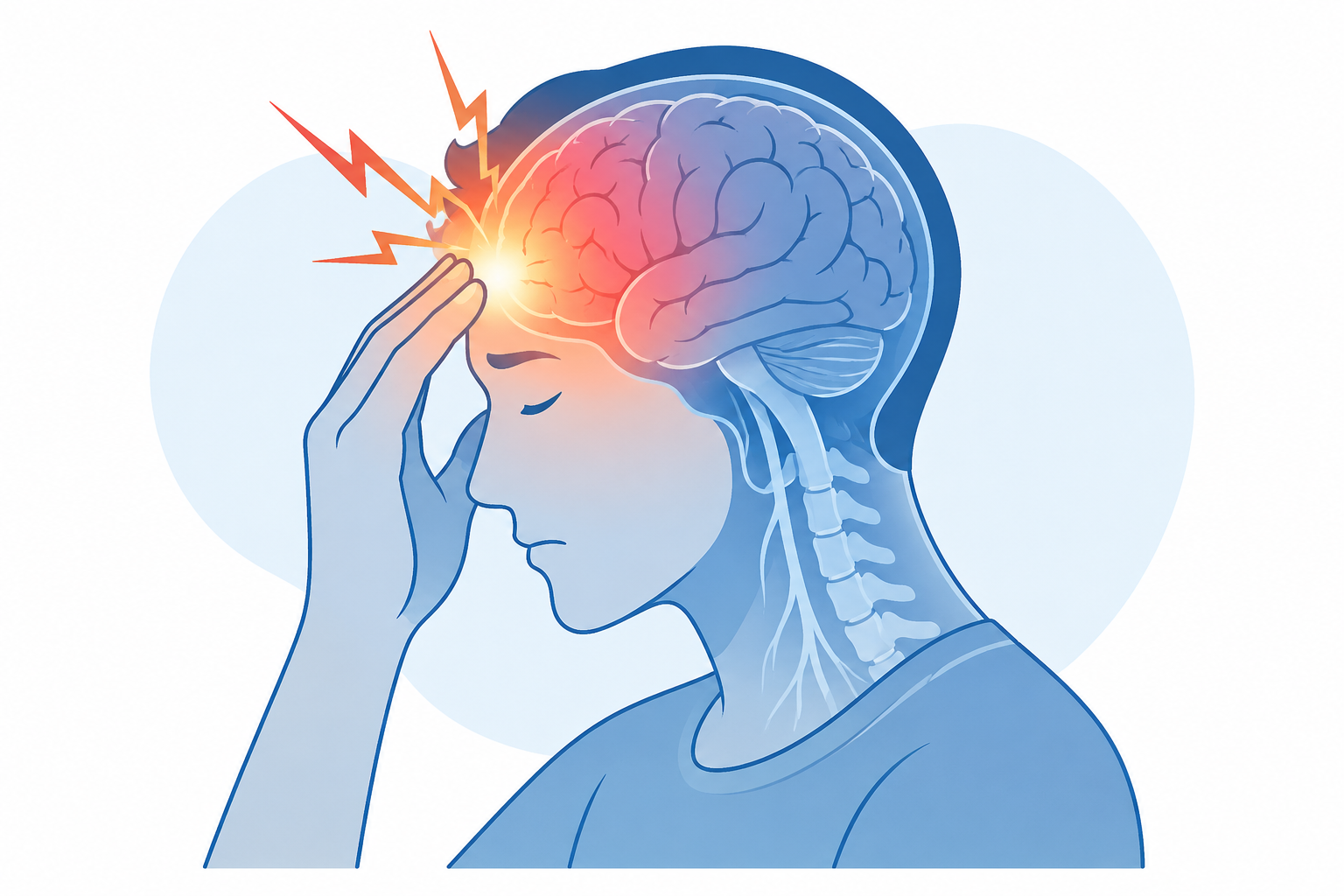
Concussions affect the brain, and vision is a brain function. About 50% of the brain is involved in visual processing. When the brain gets rattled, the visual system often takes a hit.
Vision does get some attention in standard post-concussion care. A physician might ask whether you see clearly, check that your pupils respond to light, or run a brief eye movement screen to see whether it brings symptoms on. What that stops short of is a comprehensive assessment, which measures how well the eyes team, focus, and track rather than simply flagging that something is off.
A 2016 study of adolescents with concussion(opens in new tab) found that 69% had at least one vision diagnosis. Accommodation disorders showed up in 51%. Convergence insufficiency in 49%. Saccadic dysfunction in 29%. Nearly half had more than one problem. These are common complications.
What post-concussion vision problems look like
The symptoms don't scream "vision problem." They mimic general post-concussion syndrome, fatigue, cognitive issues, anxiety. That's why they get overlooked.
Blurry vision after concussion is one of the most common complaints. Things go in and out of focus, especially during reading or screen use. Double vision after concussion is also frequent—sometimes constant, sometimes only when tired or doing close work. Both are signs the visual system was affected by the injury.
Convergence insufficiency is when your eyes struggle to turn inward for near tasks. Reading becomes effortful. Words blur or double. You might get headaches after 10 minutes of close work. Some people unconsciously close one eye to cope.
Accommodation dysfunction means your focusing system isn't working properly. Shifting focus between near and far takes longer than it should. Things go in and out of blur. Extended reading or screen time wipes you out.
Eye movement problems show up as difficulty tracking moving objects or jumping between targets. You lose your place while reading. Scanning a room feels disorienting. Sports performance drops off.
Light sensitivity is common too. Bright lights, screens, even normal indoor lighting can feel overwhelming. This often persists long after other symptoms improve.
Post-concussion headaches and migraines frequently have a visual component. When the eye coordination or focusing system is strained, it triggers headaches—often behind the eyes or at the temples. These headaches typically worsen with reading, screen use, or visually demanding tasks. Migraine treatment sometimes proceeds without anyone checking whether a vision problem is contributing to the trigger.
Visual motion sensitivity makes busy environments hard to tolerate. Grocery stores, scrolling on phones, being a passenger in a car. The visual system is having trouble processing motion.
Trouble filtering competing input often comes along with it. In a restaurant, background noise, music, and movement at the edge of your vision all compete for attention, and sorting the important from the unimportant stops being automatic. When the visual system is already working hard to keep things clear and single, there's less capacity left for that sorting. Hearing and balance play a part too, but lowering the visual effort often makes these environments easier to be in.
Dizziness and vestibular issues often have a visual component. Your eyes and your sense of balance normally work together to keep the world looking still while you move around. Balance therapy handles part of that, and the eye movement work handles the rest.
Dry, gritty eyes show up more often than people expect. Blink rate drops during effortful visual work, and when eye teaming and focusing are struggling, reading and screens are exactly that. Fewer, less complete blinks mean the eyes burn, vision smears until you blink, and light feels harsher. Worth flagging because it's quick to treat, and treating it takes a layer off the symptoms sitting on top of it.
Why these are easy to miss
Several reasons. First, concussion care screens the visual system rather than assessing it in depth. It can tell you the visual system is bothered without identifying which skill is struggling or by how much, and those are the details a treatment plan is built on.
Second, the symptoms overlap with other post-concussion issues. Fatigue, headaches, difficulty concentrating. It's easy to attribute everything to "post-concussion syndrome" without investigating the visual system specifically.
Third, a routine eye exam doesn't necessarily fill the gap either. It's built around whether you need glasses and whether your eyes are healthy, both of which matter, but neither of which says much about how the two eyes work together. You can read the chart perfectly and still have real eye coordination problems, because nothing in that appointment asked about them.
Finally, patients don't know to ask. If you've never heard of convergence insufficiency, you won't mention it to your doctor. You'll just say you're tired, or that reading is hard, or that something feels wrong.
What a post-concussion eye exam actually checks
A proper post-concussion eye exam — really a comprehensive binocular vision assessment — is different from the standard eye exam you'd get for glasses. We test how well the eyes track, focus, and work together, and how well the brain interprets what they send it. We measure convergence, accommodation, and saccadic eye movements. We look at how the visual system functions under stress.
For post-concussion patients, I specifically evaluate:
Near point of convergence — how close you can bring a target before seeing double
Accommodative amplitude and facility — how well you focus and shift focus
Pursuit and saccade accuracy — how smoothly your eyes track and jump between targets
Vergence ranges — how much reserve your eye coordination system has
Visual symptoms under load — what happens when the system is challenged
Visual perception — how well the brain makes sense of what the eyes send it, like judging where things are in space or picking out detail against a busy background
These tests reveal dysfunction that wouldn't show up otherwise. A patient might read 20/20 on the chart but have convergence insufficiency severe enough to make reading painful.
Treatment: vision therapy for post-concussion problems
The visual system can recover. Even months or years after injury, the brain retains enough plasticity to retrain these skills.
A study of post-concussion vision therapy outcomes(opens in new tab) found that among patients who completed treatment, 85% with convergence insufficiency achieved successful outcomes and 15% showed improvement. For accommodative insufficiency, 33% were successful and 67% improved.
That's 100% of completers showing improvement. Not everyone completes therapy, but those who do consistently get better.
It's worth being straight about what "better" means, though. For many people, therapy restores comfortable reading and screen work, and the symptoms that were shaping their day fade into the background. For others, particularly after a more severe injury or a series of them, the gains are real but stop short of exactly how things felt before. A precise return to your old baseline happens, but it isn't something I'd promise at the outset.
Vision therapy for post-concussion problems involves exercises that retrain eye coordination, focusing, and tracking. Sessions are typically weekly, with home exercises between appointments. The program is individualized based on which visual functions are affected. (For a detailed look at what treatment involves, see our guide on what to expect during vision therapy sessions.)
For post-concussion patients, we often coordinate with other providers. Physical therapists working on vestibular rehabilitation. Physicians managing overall recovery. This type of care falls under neuro-optometry, an area of optometry focused on vision problems caused by brain injuries and neurological conditions. Vision is one piece of the puzzle, and it's a piece worth including.
When to suspect a visual component
The right time to look at this is not the week of the injury, when plenty of symptoms are still settling on their own. It's once you're a few weeks out and things haven't resolved. Consider a vision evaluation if:
Blurry vision persists, especially when reading or using screens
You see double, even occasionally
Headaches persist, especially with reading or screens
You tire quickly during visual tasks
Reading is harder than before the injury
You lose your place or skip lines while reading
Light sensitivity hasn't resolved
Busy visual environments are overwhelming
You feel "off" in ways that are hard to describe
Standard post-concussion treatment hasn't fully worked
These symptoms don't automatically mean vision therapy is needed. But they warrant a thorough look at the visual system.
What I see in practice
A typical post-concussion patient in my office has already been through the standard protocol. Rest. Gradual return. Maybe some vestibular therapy. They're technically cleared but still struggling.
When I test their binocular vision, the problem becomes obvious. Near point of convergence at 15cm when it should be 5cm. Accommodation that fatigues after a few cycles. Saccades that overshoot or undershoot targets.
The patient often feels validated. They knew something was wrong. They just couldn't identify what.
Treatment takes work. Weekly sessions, daily home exercises, often for several months. (See our vision therapy cost breakdown for what to expect financially.) But the improvement is usually measurable within weeks. Patients start reading longer. Headaches decrease. Screens become tolerable again.
The bottom line
Post-concussion vision problems are common, treatable, and easy to overlook. If your post-concussion symptoms haven't fully resolved, especially symptoms involving headaches, reading, screens, or visual overwhelm, the visual system is worth a closer look.
A comprehensive binocular vision assessment can identify problems that standard testing isn't designed to detect. And if problems are found, vision therapy has strong success rates for post-concussion patients who commit to the program.
Don't assume lingering symptoms are just "how it is now." There may be a specific, addressable cause.
Not sure whether your lingering symptoms have a visual component? Our vision therapy quiz asks 11 quick questions about reading, headaches, and focus, then tells you whether an assessment is worth booking. It takes about two minutes.
Ready to get evaluated?
If symptoms have persisted for weeks or months after a concussion, a binocular vision assessment can determine whether your visual system is contributing. Submit an inquiry(opens in new tab) and our team will be in touch to discuss your situation.